

A new study published recently in Aging (Aging-US) Volume 17, Issue 6, examines a novel treatment for women with ovarian failure. Researchers from IVI Clinics Alicante in Spain investigated a procedure called Stem Cell Regenera, which uses the body’s own stem cells and platelet-rich plasma to activate dormant follicles in the ovaries.
Aging Research

In this special collection, Aging seeks to bring together cutting-edge research that spans the cellular and molecular underpinnings of cognitive aging with insights into the psychosocial, behavioral, and environmental factors that modulate its course.

A new study published recently as the cover of Aging Volume 17, Issue 6, describes a new method to estimate how fast the brain is aging. By analyzing lipids, or fat molecules, in brain tissue, researchers from the National University of Singapore and Hanze University of Applied Sciences created a biological “clock” called DoliClock.
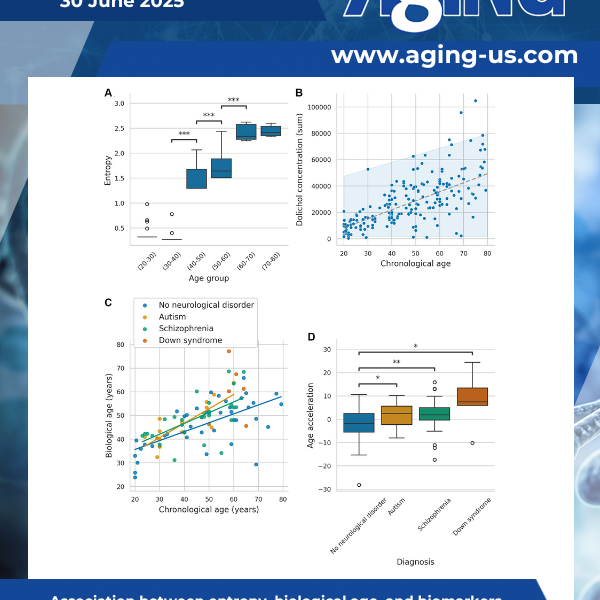
This study introduces DoliClock, a lipid-based biological aging clock designed to predict the age of the prefrontal cortex using post-mortem lipidomic data. Significant age acceleration was observed in autism, schizophrenia, and Down syndrome.

Recent discoveries in aging research reveal a powerful insight: the biological changes that lead to chronic diseases begin far earlier than most people realize—often in midlife, well before symptoms appear. This early phase offers a valuable opportunity for prevention.
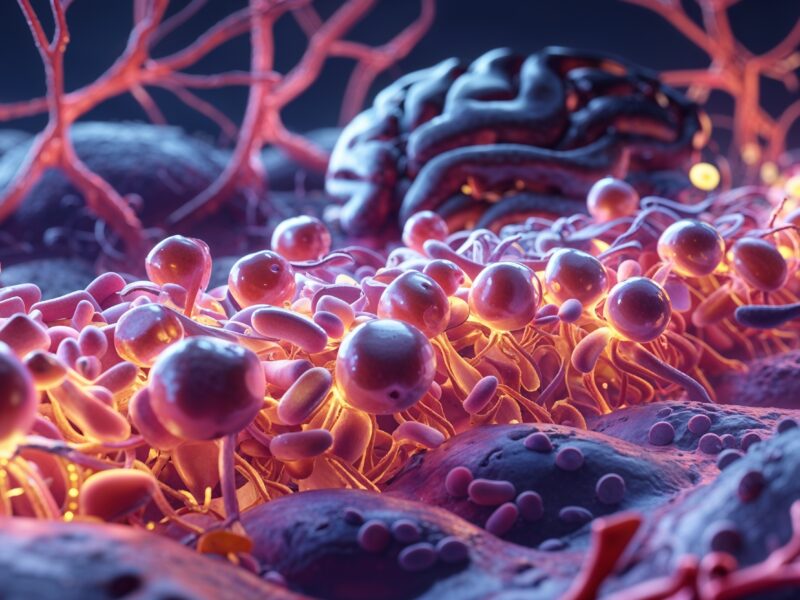
As we age, our brains become more sensitive to stress and disease. A recent study sheds light on a lesser-known risk: reduced oxygen levels.

Impact Journals, the publisher of Aging, is once again proudly sponsoring the Open Access Team in the annual Ride for Roswell.

The Longevity & Aging Series has been honored with the Silver Award for “Excellence in Video/Film” at the inaugural EPIC Awards celebration on May 29, 2025, during the Society for Scholarly Publishing (SSP) 47th Annual Meeting in Baltimore, Maryland.
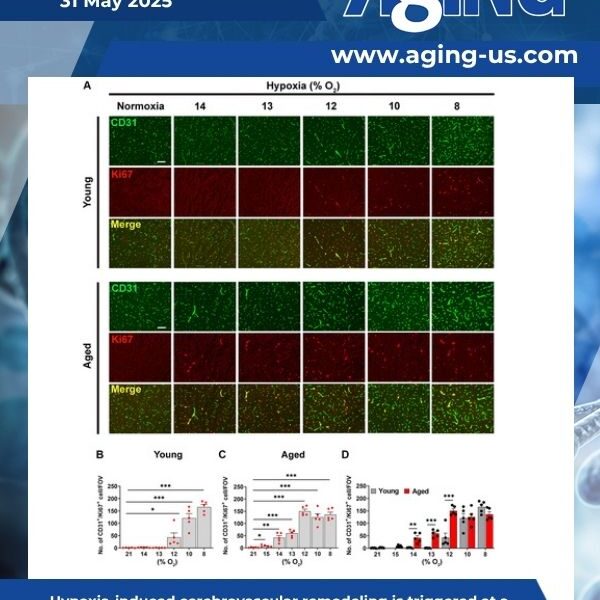
Chronic mild hypoxia (CMH; 8% O2) triggers transient blood-brain barrier (BBB) disruption, an effect greatly increased with age. As BBB disruption predisposes to neuronal death and cognitive decline, here we defined the hypoxic thresholds that trigger BBB breakdown in young and aged mice, and then defined the age at which hypoxia-induced BBB disruption significantly increases.

In a world where we are living longer but not always healthier, scientists are searching for ways to add life to our years, not just years to our lives. A recent study published in Aging (Aging-US), Volume 17, Issue 4, led by researchers at the National University of Natural Medicine, suggests that certain common foods, already known for their health benefits, might also help slow or even reverse epigenetic or biological aging.