
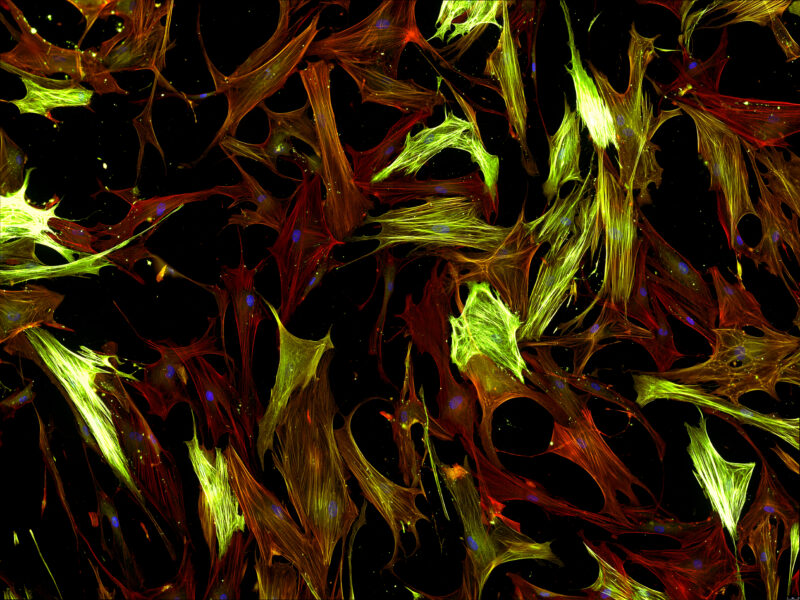
Aging has long been linked to a range of biological processes, including cellular senescence, epigenetic changes, and chronic tissue remodeling. Yet, these explanations often describe what happens during aging rather than why certain age-related diseases, such as fibrosis, continue to progress over time.
Aging-US Research

A new research perspective published in Volume 18 of Aging-US introduces a unifying concept in aging biology, titled “A decline in glycolytic ATP production is the fundamental mechanism limiting lifespan; species with an optimal rate of decline over time survived.”

In this study, titled “Plant-based dietary patterns are associated with slower epigenetic aging,” the researchers examined whether plant-based dietary patterns are linked to biological aging in large, diverse U.S. populations.

A research paper, titled “Causal effects of inflammation on long-term mortality: A mendelian randomization study” was published in Volume 18 of Aging-US by an international team of researchers, provides a definitive answer by using a powerful genetic technique to untangle cause from effect.
The aging of an organism is reflected not only in the function of its organs but also in the molecular signatures written into its cells. For years, scientists have cataloged the changes in protein-coding genes and various non-coding RNAs that occur as we grow older.

In this study, titled “Single-cell transcriptomics reveal intrinsic and systemic T cell aging in COVID-19 and HIV” and published in Volume 18 of Aging-US, researchers used single-cell RNA sequencing to analyze aging-related changes in human T cells.
Aging reshapes the immune system in two fundamental ways: it alters the proportions of different immune cell types circulating in the blood, and it induces molecular changes within each individual cell.

Aging-US sincerely thanks all reviewers who contributed their expertise and time during 2025.
Aging has long been explained in different ways. One traditional view is that it results from the gradual accumulation of molecular damage over time. Another perspective, based on evolutionary theory, suggests that natural selection strongly protects health during youth and reproductive years but becomes less effective later in life.

While maternal health has traditionally been central to research on pregnancy and child development, there is growing recognition that paternal factors also play a role, particularly the father’s age. Several studies have found a modest increase in risk of neurodevelopmental conditions, including autism spectrum disorder, among children born to older fathers. However, the biological mechanisms underlying this association are still not fully understood.