

Synucleinopathies are a group of age-related neurological disorders, including Parkinson’s disease, dementia with Lewy bodies, and multiple system atrophy. Most individuals are not diagnosed until these diseases have significantly progressed, as early symptoms, such as a reduced sense of smell, subtle cognitive or motor changes are too vague to serve as reliable indicators.
Aging Research

Synucleinopathies are age-dependent neurodegenerative diseases characterized by alpha-synuclein accumulation with distinct vulnerabilities across brain regions. Understanding early disease stages is essential to uncover initial molecular changes that might enable earlier diagnosis and causal therapy.

In this special collection, Aging seeks to bring together cutting-edge research that spans the cellular and molecular underpinnings of cognitive aging with insights into the psychosocial, behavioral, and environmental factors that modulate its course.

A new study published recently as the cover of Aging Volume 17, Issue 6, describes a new method to estimate how fast the brain is aging. By analyzing lipids, or fat molecules, in brain tissue, researchers from the National University of Singapore and Hanze University of Applied Sciences created a biological “clock” called DoliClock.
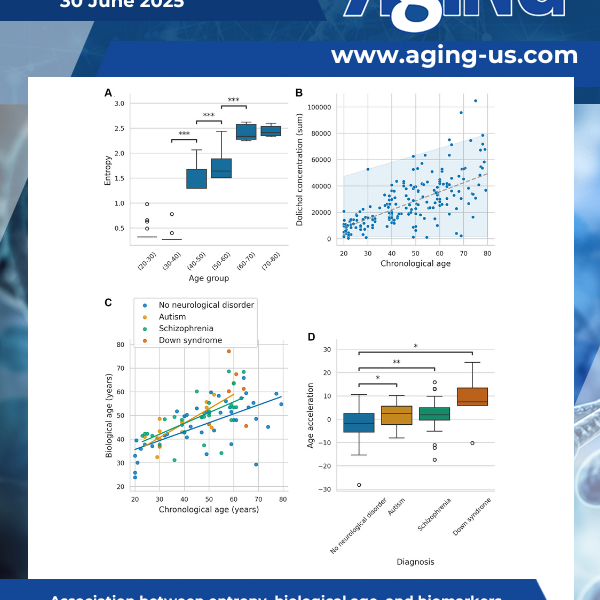
This study introduces DoliClock, a lipid-based biological aging clock designed to predict the age of the prefrontal cortex using post-mortem lipidomic data. Significant age acceleration was observed in autism, schizophrenia, and Down syndrome.